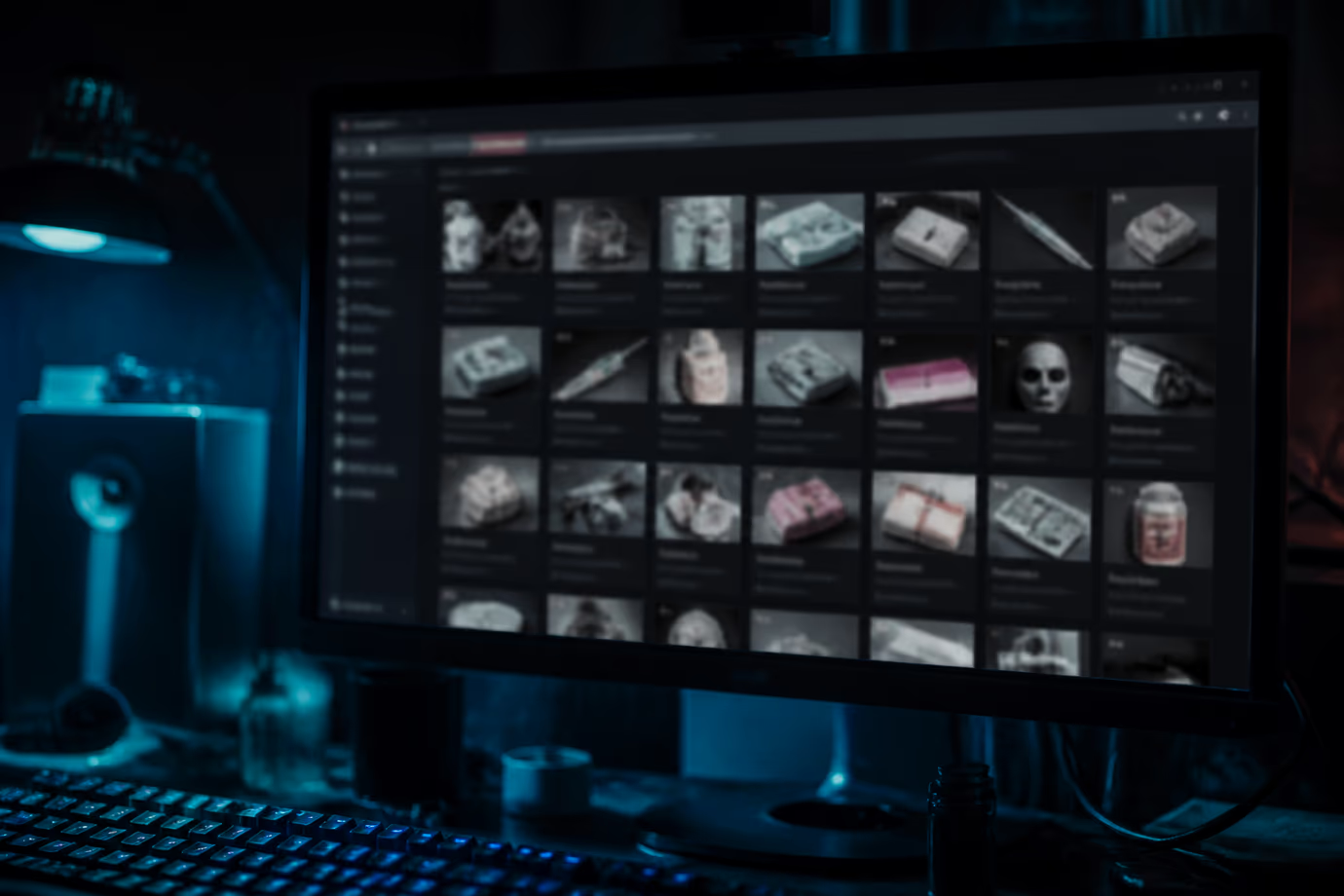
For most users, understanding the "Dark Web Prices List" serves primarily as a defense mechanism, highlighting the value of personal data to threat actors. We advise focusing on "Protecting Your Information from Dark Web Exposure" and "How to Check if Your Data is on the Dark Web." This approach helps you identify vulnerabilities and take proactive steps, such as using services like haveibeenpwned.com or Experian's Dark Web Scan [9, 10]. For those engaged in cybersecurity research or law enforcement, a detailed analysis of "Stolen Personal Data Prices" and "Illicit Services and Malware Pricing" offers critical insights into threat landscapes.
Dark Web Prices List
- Item Type
- Hacked Credit Card
- Price Range
- $110 - $287.5
- Quality
- High
- Legality
- Illegal
- Availability
- Common
- Notes
- Balance affects price.
- Item Type
- Hacked Netflix Account
- Price Range
- $10
- Quality
- Low
- Legality
- Illegal
- Availability
- Common
- Notes
- Affordable for many.
- Item Type
- Hacked Uber Account
- Price Range
- $12
- Quality
- Low
- Legality
- Illegal
- Availability
- Common
- Notes
- Similar to Netflix.
- Item Type
- Physical Driving License
- Price Range
- $70 - $165
- Quality
- Medium
- Legality
- Illegal
- Availability
- Less common
- Notes
- Price varies by nationality.
- Item Type
- Physical Passport
- Price Range
- $3,800
- Quality
- High
- Legality
- Illegal
- Availability
- Rare
- Notes
- Price has decreased slightly.
- Item Type
- Premium Malware
- Price Range
- $4,500 per 1,000 installs
- Quality
- High
- Legality
- Illegal
- Availability
- Common
- Notes
- High demand for quality.
- Item Type
- High-Quality Malware
- Price Range
- $1,100 - $1,800 per 1,000 installs
- Quality
- Medium
- Legality
- Illegal
- Availability
- Common
- Notes
- Price increased from previous years.
- Item Type
- Social Security Number
- Price Range
- $1 - $10
- Quality
- Low
- Legality
- Illegal
- Availability
- Common
- Notes
- Widely available.
- Item Type
- Credit Card Details with CVV
- Price Range
- $10 - $240
- Quality
- Varies
- Legality
- Illegal
- Availability
- Common
- Notes
- Depends on balance and country.
- Item Type
- Bank Account Login Credentials
- Price Range
- $30 - $4,000
- Quality
- Varies
- Legality
- Illegal
- Availability
- Less common
- Notes
- Price depends on account balance.
- Item Type
- Full Identity Package ('fullz')
- Price Range
- $16 - $228
- Quality
- Medium
- Legality
- Illegal
- Availability
- Common
- Notes
- Includes various personal details.
- Item Type
- Email Address and Password
- Price Range
- $1 - $20
- Quality
- Low
- Legality
- Illegal
- Availability
- Common
- Notes
- Easily accessible.
Understanding Dark Web Marketplaces and Their Offerings
Dark web marketplaces serve as platforms for buying and selling a variety of illicit goods and services, operating outside the reach of traditional law enforcement. These marketplaces typically offer categories such as stolen data, forged documents, and various illegal services.
In terms of stolen data, you can find items like hacked credit cards, which generally range in price from $110 to $287.5, depending on the balance available on the card (1). For those seeking personal accounts, a hacked Netflix account is priced at around $10, while an Uber account can be purchased for $12 (2).
Forged documents are also available, with physical driving licenses costing between $70 and $165 based on nationality, and physical passports priced at approximately $3,800 [3, 4].
Illicit services include malware, which can be categorized by quality and installation price. Premium-quality malware can cost around $4,500 per 1,000 installs, while high-quality malware installations are priced between $1,100 and $1,800 [5, 6].
While browsing dark web marketplaces is not illegal, engaging in transactions involving illegal goods and services is punishable by law [7, 8]. It's crucial to understand that this information is provided for educational purposes only, and engaging in these activities carries significant legal risks.
Stolen Personal Data Prices
The dark web offers a range of prices for various types of stolen personal data, reflecting the high demand for such information. Understanding these prices can help individuals recognize the value of their personal data and the risks involved.
Social Security numbers (SSNs) are available for approximately $1 to $10, making them one of the cheapest items on the market (3). In contrast, credit card details with CVV can range from $10 to $240, depending on the balance and the country of origin (3). Bank account login credentials vary significantly, costing between $30 and $4,000, influenced by the account's balance (3).
Full identity packages, commonly known as "fullz," are priced between $16 and $228. These packages typically include a combination of personal information such as SSNs, names, and addresses (3). For those interested in physical identification documents, a driving license can be obtained for $70 to $165, while a physical passport is priced at around $3,800 [3, 4].
Here's a summary of the price ranges for stolen personal data:
| Item Type | Price Range |
|---|---|
| Social Security Number | $1 - $10 |
| Credit Card Details with CVV | $10 - $240 |
| Bank Account Login Credentials | $30 - $4,000 |
| Full Identity Package ('fullz') | $16 - $228 |
| Physical Driving License | $70 - $165 |
| Physical Passport | $3,800 |
These prices indicate the lucrative market for stolen data and the potential risks to personal privacy and security. Individuals should remain vigilant about their data exposure and consider using monitoring services to protect against identity theft.
Digital Accounts and Credentials Pricing
Prices for compromised digital accounts vary significantly based on the type of account and its characteristics. Understanding these prices can help you gauge the potential risks associated with your online credentials.
Streaming service accounts, like Netflix, are relatively inexpensive. A hacked Netflix account can be purchased for around $10, while an Uber account is priced at approximately $12 (2). These accounts are often sold in bulk and are commonly available on dark web marketplaces.
Social media and email accounts also have a low entry price. For instance, an email address and password combination can be found for as little as $1 to $20 (3). However, the value of these accounts can increase if they have been active for a longer duration or have established followers.
Cryptocurrency wallets are more variable in price, often depending on the balance they hold. Bank account login credentials can range from $30 to $4,000, influenced heavily by the account balance (3). This price fluctuation highlights the importance of maintaining secure and complex passwords.
Factors influencing these prices include account age, balance, and the type of service. Older accounts with established histories tend to fetch higher prices, while accounts with significant balances are more valuable. For example, hacked credit cards with balances up to $5,000 were valued at $110 in 2023, reflecting a general trend of increasing prices for compromised accounts (1).
In summary, the pricing for digital accounts on the dark web is determined by several factors. Here’s a quick reference for common account types and their price ranges:
| Account Type | Price Range |
|---|---|
| Hacked Netflix Account | $10 |
| Hacked Uber Account | $12 |
| Email Address and Password | $1 - $20 |
| Bank Account Login Credentials | $30 - $4,000 |
Recognizing the value of these accounts can help you take proactive steps to secure your personal information and mitigate risks associated with data breaches.
Forged Documents and Physical Items
Prices for forged documents and physical items vary significantly on the dark web, often reflecting the quality and regional demand. For individuals seeking forged identification, a physical driving license typically costs between $70 and $165, depending on the nationality of the document. This price represents a notable decrease from previous years, where costs ranged from $150 to $2,000 (1).
In contrast, a physical passport is priced much higher, averaging around $3,800 in 2024. This marks a slight reduction from the $2,500 to $4,000 range observed from 2021 to 2023 (1). The high cost of passports can be attributed to their complexity and the legal implications of obtaining such documents illegally.
When considering the purchase of forged documents, it's essential to weigh the risks and benefits. These items are illegal to buy and possess, exposing users to potential legal consequences. The market for forged documents is not as saturated as that for digital goods, making them less readily available.
Here's a summary of the price ranges for forged documents:
| Document Type | Price Range | Quality | Availability |
|---|---|---|---|
| Physical Driving License | $70 - $165 | Medium | Less common |
| Physical Passport | $3,800 | High | Rare |
These prices illustrate the financial implications of engaging with the dark web for forged documents. Individuals should carefully consider their motivations and the potential repercussions before pursuing such options.
Illicit Services and Malware Pricing
Illicit services on the dark web include DDoS attacks, malware, and hacking services, with prices reflecting the complexity and demand for these offerings. Understanding these costs is essential for recognizing the risks involved.
DDoS attack services can vary widely, often starting from a few hundred dollars for basic attacks and reaching up to $1,000 for more sophisticated operations. The effectiveness and duration of the attack typically influence pricing.
Malware prices also show considerable variability. In 2023, premium-quality malware was priced at approximately $4,500 per 1,000 installs, while high-quality malware installations in 2024 ranged from $1,100 to $1,800 per 1,000 installs, indicating a rising trend in costs [5, 6]. This increase may reflect a growing demand for effective malware tools among cybercriminals.
For individuals seeking hacking services, the cost can range from $50 for basic services to several thousand dollars for advanced hacking techniques targeting specific systems or databases. The scope and difficulty of the hacking job dictate the final price.
Here's a summary of the pricing for various illicit services:
| Service Type | Price Range | Notes |
|---|---|---|
| DDoS Attack | $100 - $1,000 | Price varies by attack complexity. |
| Premium Malware | $4,500 per 1,000 installs | High demand for quality. |
| High-Quality Malware | $1,100 - $1,800 per 1,000 installs | Prices have increased recently. |
| Hacking Services | $50 - $5,000 | Depends on job complexity and target. |
Engaging in these activities carries significant legal risks, as purchasing or utilizing such services is illegal and punishable by law [7, 8]. Individuals should consider the consequences of their actions and the potential impact on their personal security.
Factors Influencing Dark Web Prices
Several factors drive prices on the dark web, impacting the cost of various illicit goods and services. Understanding these influences can help you navigate this complex marketplace.
Data freshness plays a crucial role. For instance, a hacked credit card with a balance of up to $5,000 saw its price increase from $110 in 2023 to $287.5 in 2024, reflecting demand for recently compromised data (1). Completeness of information also matters; a full identity package, or "fullz," can range from $16 to $228, depending on the amount of personal data included (3).
Demand significantly affects pricing. For example, hacked Netflix accounts are priced at around $10, while Uber accounts cost about $12 (2). The perceived value of the item, based on how difficult it is to acquire or how useful it is to buyers, also impacts prices. High-quality malware installations, for instance, range from $1,100 to $1,800 per 1,000 installs, indicating a rise in demand for effective cyber tools (1).
Regional differences can lead to price variations as well. A physical driving license can cost between $70 and $165, depending on the nationality, reflecting the supply and demand dynamics in different regions (1). Major data breaches can also inflate prices; for example, Social Security numbers can be found for $1 to $10, but during peak breach periods, prices may surge due to heightened demand (3).
By understanding these factors, you can better assess the risks and implications of engaging with the dark web.
Protecting Your Information from Dark Web Exposure
To safeguard your personal information from dark web exposure, implement a combination of strong passwords, two-factor authentication (2FA), and regular monitoring of your credit reports. These strategies can significantly reduce the risk of identity theft and data breaches.
Start with strong passwords. Use unique, complex passwords for each account, ideally incorporating a mix of letters, numbers, and symbols. Password managers can help you generate and store these securely. Next, enable 2FA wherever possible. This adds an extra layer of security by requiring a second form of verification, such as a text message or authentication app, in addition to your password.
Monitoring your credit reports is crucial. Regularly check for any unauthorized accounts or changes. Services like Experian's Dark Web Scan can help you identify if your personal information has been compromised (4). Additionally, consider using tools that alert you to data breaches, such as haveibeenpwned.com, to stay informed about potential exposures (5).
Be cautious of phishing attempts. Always verify the source of emails or messages before providing personal information. Cybercriminals often use deceptive tactics to trick users into disclosing sensitive data.
Finally, utilize privacy-focused tools. Consider using a VPN when browsing, as it can encrypt your internet traffic and mask your IP address, making it harder for attackers to track your online activities. Tools like Tor can also enhance your anonymity online, but be aware that while accessing the dark web is legal, engaging in illegal activities is not [7, 8].
By following these steps, you can significantly enhance your personal data security and reduce the likelihood of exposure on the dark web.
How to Check if Your Data is on the Dark Web
Discovering whether your personal information has been compromised on the dark web can be crucial for maintaining your privacy. There are several legitimate services and tools available to help you assess if your data is at risk.
Start by using online tools like haveibeenpwned.com. This website allows you to check if your email address has appeared in any public data breaches. Additionally, many antivirus software or password manager tools include similar features that can alert you to potential breaches.
For a more comprehensive scan, consider services like Experian's Dark Web Scan. This service searches over 600,000 pages for sensitive information such as Social Security numbers, emails, or phone numbers, dating back to 2006. Such scans can provide peace of mind regarding your data's exposure (4).
While these tools are effective, they have limitations. They typically focus on publicly available breaches and may not cover all dark web transactions. Additionally, they may not detect data that hasn't been exposed in significant breaches but is still available for sale.
Costs for these services can vary. Some tools offer free scans, while others may charge for more in-depth monitoring. For example, Experian's service may have associated fees depending on the level of monitoring you choose.
Using these tools is suitable for anyone concerned about their data security, especially individuals who have experienced data breaches or suspect their information may have been compromised. By regularly checking and monitoring your data, you can take proactive steps to protect your privacy and mitigate risks associated with dark web exposure.
Pros and Cons of Using Dark Web Monitoring Services
| Advantages | Cons |
|---|---|
|
|
Conclusion: What to Choose
When navigating the dark web, prioritize security and legality. We advise against engaging with illicit services or purchasing forged documents due to severe legal risks and potential financial loss [7, 8]. Instead, focus on protecting your data.
For safeguarding your personal information, regularly use services like haveibeenpwned.com to check for data breaches and consider a comprehensive dark web scanning service such as Experian's Dark Web Scan (4). These tools help you monitor for exposure without direct engagement with illicit markets.
If you are exploring the dark web for privacy and anonymity, ensure you understand how to use Tor safely. We recommend reviewing our guide on How to Use Tor Safely to minimize risks. Avoid any transactions that involve illegal goods or services, as the consequences outweigh any perceived benefits.
People also ask
How much does it cost to access the dark web?
Accessing the dark web itself does not cost anything. Browsing the dark web is not illegal, and tools like Tor Browser, which is commonly used to access it, are free to download and use [7, 8].
Is it illegal to enter the dark web?
No, entering the dark web is not illegal. Using tools like Tor or a dark web browser to access it is permissible [7, 8]. However, engaging in illegal activities such as purchasing illicit goods, downloading illegal content, or participating in criminal services while on the dark web is punishable by law (6).
How much is personal information worth on the dark web?
The value of personal information on the dark web varies significantly. For example, a Social Security number can cost $1 to $10, while credit card details with CVV range from $10 to $240 depending on the balance [11, 12]. Bank account login credentials can be priced between $30 and $4,000, and a full identity package, or 'fullz,' costs $16 to $228 [13, 14].
Footnotes
Explore More Insights on Privacy
Discover additional resources to enhance your online security.
Visit Our ResourcesRelated resources
We collect these links for readers who want to compare options. Where to go.