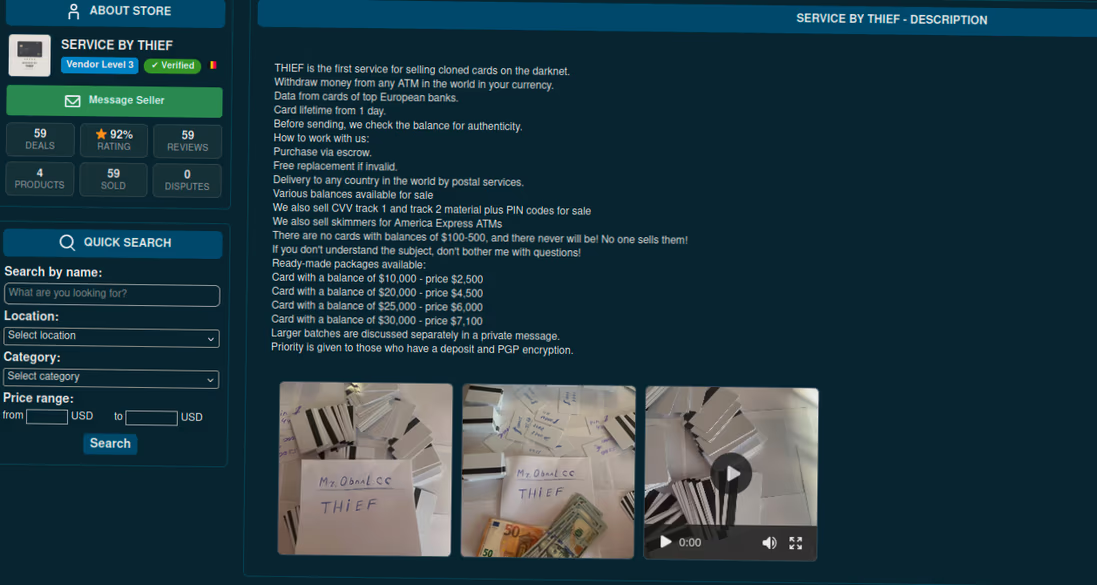
We often investigate the less visible dimensions of the internet, but certain actions can lead to serious consequences that even experienced individuals in digital anonymity may miss. This examination reveals how an action perceived as anonymous on the darknet can result in severe legal repercussions, illustrating mistakes that even skilled cybercriminals can make.
At 34 years of age, Mark T. from Tampa Bay, Florida, believed he had stumbled upon an uncomplicated way to generate illegal revenue. In November 2024, he invested $480 in cryptocurrency to acquire six counterfeit debit cards along with their stolen PINs from a darknet vendor. Each card contained illicit data from compromised magnetic stripes, a common product in the underground carding community. Initially, Mark found success, managing to withdraw $4,200 from three ATMs before his activities abruptly ceased at the fourth ATM.
This account does not explore the methods he used to obtain the cards; instead, it illustrates how an individual who believed they were untraceable was caught within a mere 72 hours. It emphasizes the surprising significance of surveillance cameras at ATMs as essential investigative tools and demonstrates how a digital evidence trail linked to a cryptocurrency wallet and the U.S. Secret Service resulted in a lengthy prison sentence. This situation highlights the inherent vulnerabilities in such illegal activities and the success of contemporary anti-fraud strategies.
What matters
- ATM cameras are powerful surveillance tools that capture clear images, even in low light, making physical anonymity difficult.
- Centralized crypto exchanges with KYC can expose user identities, linking anonymous transactions to real-world individuals.
- Anti-fraud systems quickly detect unusual patterns like clustered ATM withdrawals, triggering rapid investigations.
- Physical evidence found at home (cards, MSR device) provides undeniable proof, even when digital traces are hard to follow.
- Rapid cash-out operations and lack of disguise significantly increase the risk of swift identification and arrest.
1. 1. Understanding the Carding Process
Carding represents a method of illicitly trading and utilizing stolen banking information, which remains a prominent issue within the realm of cybercrime. Mark's experience highlights a standard carding operation, divided into several distinct stages.
The first stage revolves around gathering data. Criminals obtain magnetic stripe information (track 1 and track 2) through various means, including ATM skimmers, phishing schemes, advanced shimmer devices, or by acquiring data dumps from dark web marketplaces. To protect oneself from credit card skimming, it is important to remain vigilant and recognize signs of skimming devices. It is recommended to inspect for loose components, strange attachments, or misaligned card readers. Furthermore, using a credit card skimming detector can help in identifying these threats.
The subsequent step involves embossing the stolen information. This process entails transferring the compromised data onto blank plastic cards. The objective is to create cards that closely resemble genuine ones, featuring embossed names, expiration dates, and card numbers similar to authentic bank cards. This stage is vital to ensure the cards can be effectively used in actual transactions.
When the personal identification number (PIN) is also at risk—often through hidden cameras or overlay keypads at ATMs—the buyer possesses a complete tool for cash withdrawals. This fact is vital, as it enables a cloned card to act as a fully operational asset for illicit financial activities. Without the PIN, the effectiveness of a cloned debit card is greatly reduced.
After this, the cash-out phase occurs. The buyer withdraws cash from an ATM before the genuine cardholder realizes the unauthorized transaction and has the chance to block their card. Timing is vital during this phase, as any delay increases the risk of the card being deactivated. Understanding potential skimming attempts requires knowing how to check for the presence of credit card skimmers at ATMs and gas stations.
The final step in the money laundering process involves converting cash obtained illegally into cryptocurrency, typically accomplished via a Bitcoin ATM or through a peer-to-peer exchange. This step aims to obscure the source of the funds, making them more difficult to trace. Discussions in carding forums on the dark web often provide insights on how to launder these proceeds effectively, though this process comes with its own set of risks.
Mark utilized Monero, a cryptocurrency recognized for its privacy attributes, to acquire his cards from a marketplace that remains undisclosed. The cards arrived in plain packages, indicating a successful transaction. However, a critical point often ignored by participants in these activities is that an ATM serves not only as a cash withdrawal point but also as a sophisticated system for collecting evidence. Familiarity with ATM technology and awareness of potential skimmers can greatly enhance personal security.
2. 2. The Overlooked Vulnerability: ATM Surveillance
A contemporary ATM operates as a comprehensive surveillance tool, far exceeding its primary role of dispensing cash. We recognize that numerous individuals, including those involved in illicit activities, frequently undervalue its capability to gather evidence.
The surveillance features inherent in ATMs include several crucial elements:
- Integrated Camera: These cameras are engineered to capture the user's face, typically functioning at a high resolution of 1080. Many models are also equipped with infrared lighting, facilitating clear recordings even in low-light situations. This ensures that an identifiable image of anyone using the ATM is documented, regardless of ambient lighting.
- Concealed Camera: A variety of ATM configurations incorporate an additional camera, strategically placed and often obscured from direct view. This secondary lens provides supplementary viewpoints and can capture details that the primary camera might miss, thus enhancing the overall surveillance efficacy. Recognizing this camera demands a keen eye, as its design emphasizes subtlety.
- Transaction Records: Each transaction is thoroughly documented with precise timestamps, recorded to the second. This includes the withdrawn amount, utilized card number, specific ATM ID, and transaction status. Such digital documentation creates an irrefutable timeline of events.
- Geographic Coordinates: Every ATM can determine its exact geographical location and relays this information to the central banking system. This geolocation data is crucial for pinpointing the precise location of each transaction, an essential factor for investigations.
- Network Activity Logs: All requests to the bank's processing system are meticulously recorded. This encompasses detailed metadata about the connection, which can reveal insights into the network's path and the source of the transaction request. These logs form a digital trail that is difficult to eliminate.
When Mark approached the fourth ATM located in a suburban area of Tampa Bay, these integrated features functioned perfectly. His face was captured clearly by the built-in camera, which did not include any disguises such as masks or glasses. Within a mere twenty-three seconds, $700 was withdrawn by him, his card was retrieved, and he exited. This brief interaction produced significant video evidence for identification purposes. This serves as an important reminder for those participating in discussions on forums about cloned cards and carding: the physical world does not provide the same level of anonymity as the online environment. We often advise those concerned about credit card skimming to be cautious of these cameras, as they can effectively document both criminals and legitimate users alike.
Authorities have observed that the belief in anonymity provided by the darknet leads offenders to think they are shielded in the physical realm. An ATM serves as a location where digital crime transitions into the physical realm, highlighting that it is not a darknet node and where anonymity ceases to exist. An ATM represents a transition from digital crime to physical crime, marking the end of anonymity. This statement encapsulates the misunderstanding that Mark failed to grasp. While conversations on cloned cards and carding forums may highlight the supposed anonymity of online transactions, the act of withdrawing cash directly exposes the individual to the harsh reality of physical surveillance. This underscores the importance of credit card skimmer protection devices for consumers, as well as the powerful resources accessible to law enforcement.
3. 3. The Investigation Timeline: Unraveling the Scheme
The timeline detailing the investigation into Mark's fraudulent scheme illustrates the prompt measures taken by law enforcement against dubious financial activities. Understanding the sequence of events is crucial for grasping the operational framework of contemporary fraud deterrence methods.
On Day 1 — November 2024, reports emerged of unauthorized withdrawals from accounts held by individuals in Florida, Georgia, and North Carolina. The affected cards were promptly frozen by the respective banks, which also entered the necessary information into their fraud alert systems. This initial step is essential for initiating a thorough investigation into the fraudulent activities.
Day 3: The fraud detection systems utilized by the banks identified an alarming pattern of rapid cash withdrawals executed with cloned cards across various states. This troubling trend prompted immediate alerts, escalating the case to the bank's internal investigation team. Such automated responses demonstrate the advanced security protocols established to combat financial crime.
The case was taken over by the U.S. Secret Service on Day 5, which is responsible for investigating financial crimes. An analyst from the agency promptly requested the transaction details related to the illegal withdrawals along with the surveillance footage from the ATMs. This cooperation highlights the collaborative efforts between financial institutions and federal agencies in tackling financial misconduct.
Day 8: Footage obtained from one of the ATMs captured a distinct image of Mark. We identified Mark T. by matching this image with driver’s license information, revealing that he had no previous involvement in criminal activities. Analyzing withdrawal data provided a significant lead for the investigation, revealing that transactions took place in the vicinity of his home, specifically within a 40-mile radius.
A warrant to examine Mark's online activities was secured by investigators on Day 12, which included analyzing his browsing history, ISP records, and cryptocurrency wallet actions. The review of his ISP logs revealed visits to Tor exit nodes during the time frame of the fraudulent transactions. A court order was also obtained to compel the cryptocurrency exchange where Mark bought Monero to reveal his account information, establishing a connection between his wallet and a transaction on a darknet marketplace.
Authorities executed a search warrant at Mark's residence on the 14th day. The search revealed several important items, including $3,200 in cash, packaging materials associated with the card shipment, a laptop that provided evidence of darknet marketplace activities, as well as six unmarked plastic cards and a magnetic stripe read/write device (MSR). This evidence was vital in confirming his involvement in the illicit activities. We stress the necessity for robust defenses against credit card skimming and the proper management of evidence.
Day 15: Mark was arrested. During the interrogation, he confessed to acquiring the cards and successfully withdrawing cash from four of them. He indicated that the other two cards became inactive because the bank blocked them before he could use them. This timeline, which resulted in his arrest within two weeks of the initial reports, illustrates the effectiveness of combining both digital and physical investigative methods. For those discussing card skimming tactics on platforms like Reddit, this case serves as an important warning about the associated risks. Understanding how to detect a card skimmer and tips for checking credit card skimmers is essential for protecting oneself against becoming a victim.
4. 4. The Financial and Legal Repercussions
Mark T. encountered severe consequences, highlighting the significant legal and financial ramifications associated with carding practices. The evidence indicates that the financial liabilities stemming from such unlawful activities greatly surpass any fleeting advantages that may initially appear appealing.
The following outlines key details concerning a notable case, illustrating the financial repercussions and operational specifics involved in certain illicit activities. Understanding these elements can provide insight into the methods and consequences observed in such scenarios. For further information on related topics, consider exploring resources on cybersecurity best practices and digital fraud prevention.
[object Object],[object Object],[object Object],[object Object],[object Object],[object Object],[object Object] The number of withdrawals amounts to 4. The amount we withdrew totals $4,900. The expense incurred for card acquisition amounts to $480. The duration between the withdrawal and the subsequent arrest is 15 days. A federal prison term of 5 years (60 months) has been imposed. The total amount for fines and restitution is $22,000. | Duration of Supervised Release | 3 years |
Mark's expenditure of $480 yielded $4,900 in illegal profits, yet this gain was accompanied by severe repercussions. The swift intervention by law enforcement curtailed his operations effectively. Ultimately, the short-lived illegal financial success was eclipsed by a lengthy prison term and substantial fines, which amounted to $22,000 in restitution. This situation serves as a stark reminder of the severe consequences that accompany financial misconduct. We acknowledge that the allure of quick financial rewards through carding schemes can be deceptive, frequently resulting in dire outcomes.
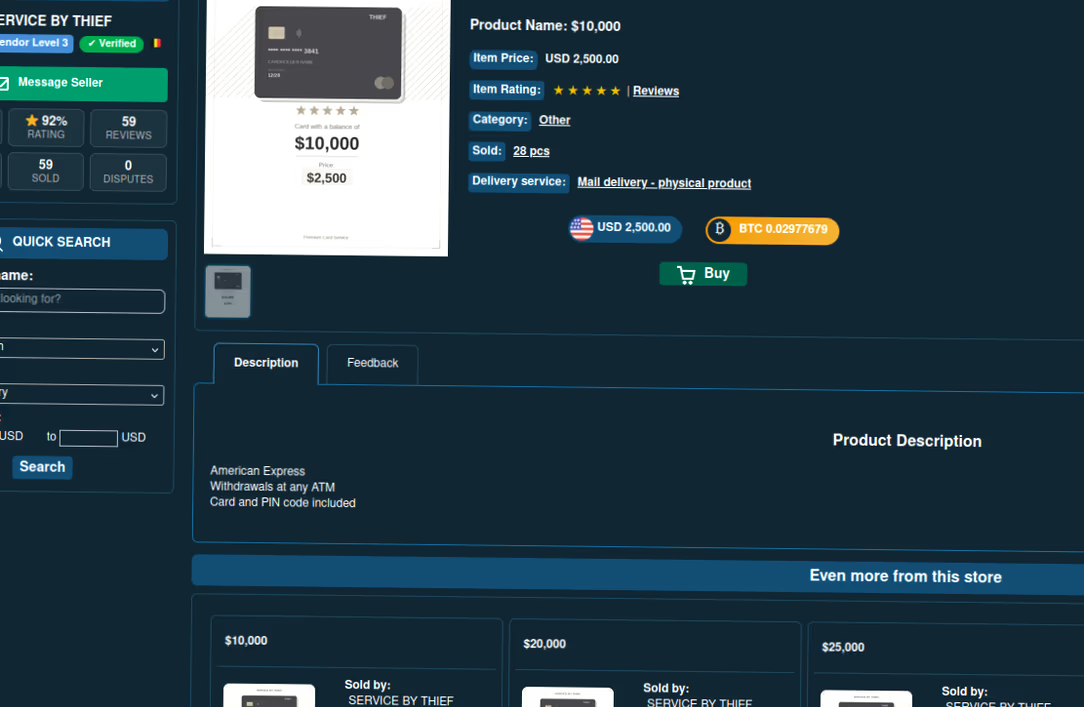
Further details on this specific case can be found on the website where the purchase was made, which was traced by authorities.
5. 5. Why Anonymous Cryptocurrencies Failed to Protect Him
Mark's choice to buy the cards with Monero, a cryptocurrency recognized for its emphasis on anonymity, ultimately did not shield him from being identified. Many people wrongly assume that such currencies guarantee complete anonymity, but this case demonstrates how a trail of evidence can still trace back to the perpetrator.
The investigation uncovered several critical vulnerabilities:
- Acquisition Method of Monero: To obtain Monero, Mark engaged with a centralized exchange that mandated Know Your Customer (KYC) procedures. He had to submit his passport along with a selfie. Following a court order, this exchange delivered his identity and transaction details to law enforcement. While tracing the later movements of Monero may be complex, the undeniable fact of its acquisition on a specific date and for a precise amount became crucial evidence linking him to the illegal activity. This reveals a significant weakness: the fiat conversion points for cryptocurrencies, a topic frequently discussed in various online forums but often not thoroughly understood.
- Timeline of Events: The entire process—from purchasing Monero, making the transaction on the darknet marketplace, to receiving the cards and ultimately withdrawing cash from ATMs—took place within a fortnight. The exact alignment of these timeframes, though circumstantial, provided strong evidence indicating a direct link between these actions. Investigators could efficiently cross-reference these occurrences, forming a compelling narrative of his behavior.
- Tangible Evidence: Authorities found concrete proof during the search of his residence, including blank plastic cards with magnetic strips. These strips were a perfect match to the data breaches experienced by the actual victims. This physical evidence is indisputable and cannot be obscured by cryptocurrency transactions. It established a direct connection that no digital anonymity could mask, confirming his involvement in the carding operation. We recommend that users take precautions against credit card skimmers by routinely checking ATMs and card readers.
- Surveillance Footage: A clear image of Mark caught by the ATM camera provided undeniable evidence. Even if every other aspect of his digital presence had been effectively hidden, the video alone was enough to link him directly to the crime scene. This physical connection often serves as a critical vulnerability for individuals engaged in illegal activities online, as they inevitably must interact with the physical world to finalize their schemes. This emphasizes the necessity of understanding how to detect card skimmers while also acknowledging the significance of surveillance.
In summary, while Monero does offer a degree of privacy for transactions, the entry and exit points within the conventional financial framework, alongside physical interactions, created a pathway that led directly to Mark. This case exemplifies that achieving total anonymity requires securing every aspect of the chain, both digital and physical.
6. 6. Analyzing Mark's Critical Errors
Mark's quick arrest was not due to sophisticated tactics to avoid detection, but rather a sequence of easily avoidable errors that drew the attention of law enforcement. We can pinpoint several significant miscalculations that played a role in his capture.
- Immediate concerns were raised by the cash withdrawals, all of which occurred within a 40-mile radius of his home. This kind of clustering is likely to trigger fraud detection mechanisms aimed at identifying suspicious activities, especially when numerous compromised cards are used in a brief period.
- Identity Exposure: Mark took no steps to disguise himself during his ATM visits—he was neither covered nor concealed in any fashion. Surveillance systems captured a clear image of him due to this oversight, which was easily traceable to the records maintained by the Florida Department of Public Safety. This fundamental mistake made it easier for authorities to identify him and undermined any assumption he had about his online privacy. Discussions in forums like Reddit frequently stress the importance of maintaining physical anonymity in such scenarios.
- Usage of a Centralized Exchange: Choosing to buy Monero through a centralized platform that required KYC verification was a major error. This choice directly connected his actual identity to the cryptocurrency transactions linked to illicit activities on the dark web. Following a judicial directive, investigators were able to access his transaction history and personal details with relative ease. This highlights a crucial lesson for anyone contemplating the use of so-called 'anonymous' cryptocurrencies for illegal purposes.
- While executing a search warrant, investigators uncovered a laptop containing records of his darknet transactions, along with an MSR device and blank cards, as well as remnants of the Tor Browser. Even seemingly deleted data can often be retrieved. The existence of these items in his residence provided irrefutable physical proof of his involvement in the carding operation, including his CF card cloning device, which was central to the investigation.
- Cash Found at His Residence: Authorities seized $3,200 in cash that matched the denominations dispensed by the ATMs. While this detail might not seem significant initially, it reinforced the prosecution's case by establishing a direct connection between him and the withdrawals. This amount could have been used to invest in protective strategies against credit card skimmers, but instead, it became a piece of incriminating evidence.
- Quick Withdrawal Window: All his withdrawals took place within a short span of just two weeks. Had he staggered these transactions over a longer period, fraud detection systems might not have flagged his activities as rapidly. Nevertheless, even with a more gradual approach, the ATM cameras would still have captured his image, ultimately leading to his identification. His hurried actions expedited his capture. This topic often sparks discussions in communities focused on cloned cards on Reddit, where some users suggest that a more measured cash-out strategy could yield better results.
These oversights reveal a fundamental truth: while the dark web and privacy-centric cryptocurrencies might create an illusion of anonymity, physical actions leave discernible traces that can lead to serious consequences. It is essential to protect oneself from card skimming; however, it is far more critical to refrain from engaging in illegal activities altogether. Always be alert for indicators of card skimming and educate yourself on how to spot credit card skimmers to evade becoming a victim of such schemes.
7. 7. Key Takeaways for Security Professionals
Mark's situation, though not connected to an overarching criminal network, offers valuable perspectives for cybersecurity practitioners regarding the efficacy of existing protective measures and the areas in need of further improvement. We interpret this as a striking example of the interplay among various layers of security.
- Automated Fraud Prevention Mechanisms are Crucial: The fraud prevention systems employed by banks acted as a frequently overlooked but highly effective initial barrier. These systems are adept at recognizing patterns, utilizing geolocation techniques, and applying scoring models, which means human oversight is only required upon the identification of clear indicators of fraudulent activity. We recommend sustained investment in advanced machine learning (ML) frameworks to enhance anomaly detection capabilities further.
- Combining Physical and Digital Evidence: The success of the investigation heavily relied on the efficient integration of physical and digital evidence. The ATM surveillance footage, a key component, would have been difficult to leverage without the associated digital transaction logs that provided precise timestamps for frame extraction. This merging of physical and digital forensics is crucial for successful investigations, emphasizing the need for systems that can link various data points. Therefore, understanding how to detect card skimmers is equally important as comprehending digital security principles.
- Challenges with "Anonymous" Cryptocurrencies: Certain cryptocurrencies, like Monero, boast enhanced privacy, yet true anonymity is compromised where they interact with traditional financial systems. The Know Your Customer (KYC) regulations imposed by centralized exchanges, where these cryptocurrencies are generally purchased, create traceable links. As long as KYC remains a norm, achieving absolute anonymity in financial transactions involving cryptocurrencies is predominantly unfeasible. The phrase
the website where the purchase was madesignifies the initial interaction point. - Lack of Customer Awareness: The failure of victims to immediately identify fraudulent withdrawals highlights a persistent issue. Timely reporting of theft enables banks to promptly block compromised cards, thereby reducing financial losses for both the individual and the institution. We believe that ongoing educational initiatives from banks to inform clients about recognizing card skimmers and monitoring their accounts play a significant role in mitigating overall fraud-related losses. This includes raising awareness about card skimming protection and devices designed to safeguard against credit card skimming.
These insights highlight that a holistic strategy, integrating advanced technological solutions with effective investigative methods and consumer education, is essential in the ongoing fight against financial cybercrime.
The Final Verdict
In March 2025, Mark T. admitted to charges of fraud related to access devices under 18 U.S.C. § 1029 and money laundering under 18 U.S.C. § 1957, resulting in a federal prison sentence of 60 months from the U.S. District Court for the Middle District of Florida, along with three years of supervised release following his time served. He was subjected to a penalty of $22,000, which also includes restitution intended for three victims impacted by his actions.
At the sentencing, the judge made it clear that Mark did not orchestrate the fraudulent operation. He was simply the buyer and the last person involved in the transactions. Although this position might appear to be of lesser importance, it still carries significant legal ramifications. Those who create such deceptive schemes usually keep their distance, making it harder for law enforcement to apprehend them. Mark's case highlights the serious consequences that can result from any degree of participation in unlawful activities, emphasizing that even a minor role can lead to serious and inescapable penalties.
Sources
Related resources
We collect these links for readers who want to compare options. Where to go.